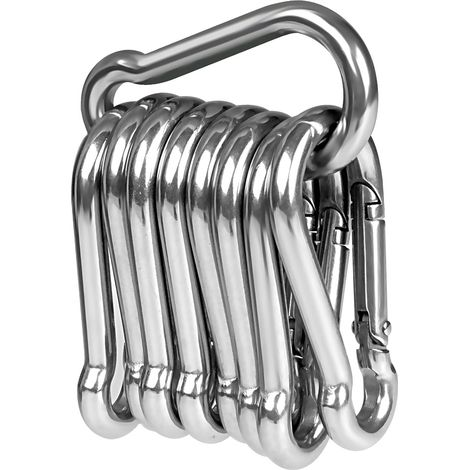
For climbing and life-safety, buy only from certified specialty retailers (REI, Backcountry, Petzl.com) that display CE EN 12275 or UIAA 121 ratings on the product page itself. For keychain and utility use, general retailers like Amazon and Walmart are fine. Never buy load-bearing carabiners from third-party marketplace listings. Source bulk industrial hardware direct from suppliers like Grainger.
Match the Retailer to Your Actual Use Case
Retailer selection depends on one question: what happens if this carabiner fails? If the answer involves a hospital, you’re in a different aisle than the person buying clips for their kid’s backpack. Don’t buy a $30 climbing carabiner to hold a water bottle, and never buy a $2 marketplace carabiner to build a belay anchor.
| Use Case | Retailer Tier | Required Certification | Example Retailers |
|---|---|---|---|
| Climbing & Rescue | Specialty Outdoor & Direct | CE EN 12275 / UIAA 121 | REI, MEC, Petzl.com, Black Diamond |
| Industrial Rigging | Industrial Supply | ANSI Z359.12 / OSHA | Grainger, FallTech, McMaster-Carr |
| Camping & Hammocks | Big Box & Sporting Goods | None | Cabela’s, Target, Walmart |
| Keychain & EDC | Marketplaces | None | Amazon, AliExpress, Dollar Tree |
| Bulk/Wholesale | B2B Portals | Varies by use | Uline, Alibaba, WesSpur |
Climbing and Life-Safety Carabiners: The Only Retailers Worth Trusting
For climbing carabiners, buy only from retailers that display UIAA or CE EN 12275 certification on the product page. Authorized specialty shops like REI, Backcountry, and Moosejaw filter their inventory to those standards by default. That’s the whole reason they exist as a channel.
Buying direct from Petzl, Black Diamond, DMM, or Edelrid removes the counterfeit question entirely. And because the top-tier brands enforce Minimum Advertised Price, buying from a specialty shop costs the same as buying direct. A Petzl Sm’D Screw-Lock runs $36 to $39 whether you order it from REI, Oliunìd, or Petzl themselves. There’s no arbitrage. If someone’s selling it for $22, that alone is the answer.
Specialty stores also restrict returns on life-safety gear in a way that matters to you as a buyer. REI will accept the return, but returned load-bearing hardware gets destroyed rather than restocked. So you’re not going to end up with someone else’s dropped biner sold back to you as new. That’s the part most buyers don’t realize they’re paying for.
The Counterfeit Carabiner Problem on Amazon, AliExpress, and Marketplaces
Counterfeit carabiners are all over Amazon third-party listings and AliExpress. Fake kN ratings, fake CE marks, and no meaningful load-bearing performance behind any of it.
The classic documented case is Petzl’s 2011 alert, where they identified counterfeit versions of the Attache M35 SL locking carabiner, the Croll B16 ascender, and the Rescue P50 pulley. Visually the fakes duplicated batch numbers, colors, and instruction sheets. Mechanically the Croll counterfeits failed at 4 kN, well under the 6 kN standard. That’s the exact kind of gap that doesn’t show up until someone loads it.
In February 2026 the UIAA updated its guidance to explicitly warn buyers away from generic online platforms, citing widespread misuse of the UIAA Safety Label.
Counterfeit red flags:
- Price is 40 to 50% below the established MAP. A $5 locking climbing carabiner does not exist honestly.
- The listing title is keyword soup — “Mountaineering Grade Professional Climbing” — with no specific brand or model number.
- CE mark spacing is wrong. If the “C” and “E” are jammed close together, that’s the “China Export” mark, not Conformité Européenne. Learn to see it once and you’ll never miss it.
- The kN rating is fictional. A 40-gram aluminum wiregate is not rated to 40 kN, no matter what the spine says.
Where to Buy Utility Carabiners (Keychains, Camping, Hammocks)
For clipping chalk bags, holding keys, or hanging a hammock: Amazon, Walmart, Target, Home Depot. A 6-pack of 3-inch aluminum utility carabiners runs about $10.99. Shipping is faster than any climbing shop and the bulk options don’t exist elsewhere.
The one rule: don’t trust the printed rating unless the carabiner comes from a climbing brand. Third-party Amazon sellers routinely print “12 kN” or “25 kN” on cast aluminum that’ll snap under a heavy pack. If it costs two bucks, it’s a keychain. Treat it like one.
Bulk and Wholesale Carabiner Sourcing
Event riggers, arborists, theater technicians — anyone hanging humans in a professional capacity — needs bulk carabiners rated for suspension, and the generalist outdoor articles skip this category entirely. Industrial suppliers like Grainger, Uline, and McMaster-Carr stock the certified steel hardware. WesSpur and FallTech go deeper on the arborist and fall-protection side.
For industrial fall protection you need ANSI Z359.12. A Kong XL Steel Auto-Block clears that with a 50 kN breaking strength and 16 kN gate strength, and it runs $33.95 through the B2B channels.
Alibaba for bulk life-safety is a hard no. Forged ANSI and CE certificates are common, chain of custody is nonexistent, and if anything ever goes to court your insurance carrier is going to look at where you sourced from before they look at anything else. Domestic industrial suppliers carry liability insurance and paperwork for a reason.
Brick-and-Mortar Options: Where to Buy Carabiners In Person
Buying in person lets you test gate action and verify the locker actually fits your belay device without a fight. REI, Cabela’s, and Decathlon are the main physical footprints.
Decathlon carries the Simond Rocky M screwgate as a budget option. It holds the CE cert, but users on r/Mountaineering in early 2026 flagged that the lock feels sticky and heavier than a Petzl Attache. That’s a preference call more than a safety issue, but it’s the exact thing you catch in five seconds at a store and never catch online.
Regional Buying Guide (US, EU, UK, Canada, Australia)
Supply chains and import taxes push the optimal retailer around depending on where you are.
- United States: REI and Backcountry dominate, plus direct from the manufacturers.
- Canada: MEC, plus independents like Climb On Equipment out of Squamish. The Sm’D Wall runs about $17.95 CAD locally.
- United Kingdom: BananaFingers and EpicTV Shop warehouse in-country, which sidesteps the Brexit customs mess.
- European Union: Bergfreunde and AlpinTrek carry the widest EN 362 and EN 12275 stock.
- Australia: Bogong Equipment, Paddy Pallin, and Mont Adventure Equipment. Mostly DMM, Edelrid, and Black Diamond by the time it clears the docks.
Used Carabiners — Where (and Where Not) to Buy
Don’t buy used climbing carabiners from strangers. Petzl and Black Diamond both say it and they’re right — you can’t verify drop history or shock-load history on someone else’s rack.
UIAA 121 sets the ceiling on an unused aluminum carabiner at 10 years from manufacture. Heavy daily use pulls that down to 1 to 3 years. In practice most guides retire lockers well before either number, but the numbers exist for a reason.
The micro-fracture-from-dropping thing is largely a myth, and tensile testing has more or less put it to bed. Physical wear, though, is entirely real. Mammut published testing showing that fixed quickdraw carabiners develop razor-sharp grooves from repeated rope pulls, and in their test a 9.5mm rope severed under an 80 kg load falling only 2.7 meters against a worn edge. That’s a bolted route hazard, not a personal-rack hazard, but it’s the same mechanism — a used biner has history you can’t see.
eBay and Facebook Marketplace sellers almost never understand any of this. If you’re going to buy used at all, buy from a climbing partner whose falls you’ve personally caught.
How to Verify a Retailer Is Selling the Real Thing
If the website is unfamiliar:
- Check the manufacturer’s dealer locator. Petzl lists every authorized global distributor. Not on the list, not your dealer. This is the fastest single filter and most people skip it.
- Verify batch numbers. Real hardware has a laser-etched batch and manufacture date on the spine.
- Check the CPSC recall database. In August 2025, C.A.M.P. USA recalled 12,600 Nimbus Lock Carabiners across batches 10 23, 02 24, and 06 25 — the automatic closing mechanism was failing to close the gate. Authorized dealers track batches and push those notices out to buyers. Marketplace sellers do not.
Price Benchmarks — What You Should Actually Pay
If you’re seeing prices 50% below these benchmarks, the product is either fake or missing the cert it claims.
| Item Type | Material | Retail Price Range |
|---|---|---|
| Single Locking Climbing (e.g., Petzl Sm’D) | Aluminum | $36.00 – $39.00 |
| Single Non-Locking Climbing (e.g., Simond) | Aluminum | $10.00 – $14.00 |
| Utility Keychain Carabiners (6-Pack) | Aluminum | $10.00 – $12.00 |
| Industrial Auto-Block (e.g., Kong XL) | Steel | $33.00 – $42.00 |
FAQ
Are Amazon carabiners safe for climbing?
Only if you’re buying from the verified storefront of a certified brand like Black Diamond or Petzl. Unbranded or third-party life-safety hardware on Amazon is a coin flip at best. Fake CE marks and false kN ratings are common enough that treating any anonymous listing as suspect is the correct default.
Where do professional climbers buy their gear?
Direct from the manufacturers — Petzl, DMM, Edelrid — or through specialty retailers like REI, MEC, and Backcountry that stock UIAA and CE EN 12275 certified equipment.
Can I buy carabiners at Walmart or Home Depot?
For keys, dog leashes, hammocks, yes. Neither carries CE EN 12275 or UIAA-certified climbing hardware. Don’t use hardware store carabiners for anything that suspends a human.
Where can I buy carabiners in bulk?
For industrial steel rated to ANSI Z359.12, source from Grainger, FallTech, or McMaster-Carr. For non-load-bearing bulk utility clips, Amazon or Alibaba have the lowest minimums.
How can I tell if a carabiner is real or fake?
Real climbing carabiners have laser-etched batch numbers, correct CE mark spacing, and kN ratings printed for major axis, minor axis, and open gate. Cross-check the batch number against the manufacturer’s database. Anything more than about 30% below retail deserves a second look. And look at the CE mark spacing — the fakes almost always get that wrong first, before they get anything else wrong.