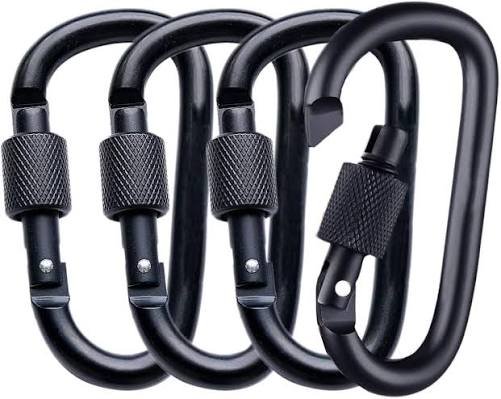
Screw Gate vs Auto-Lock Carabiners: Which Locking System Actually Wins
Screw gate carabiners lock manually via a threaded sleeve. Auto-lock carabiners engage the sleeve automatically after gate release. Screw gates win on simplicity and cost. Auto-locks win on human-error resistance. For most recreational climbers, a mixed rack gives you the safest balance: directional auto-locks for belaying, lightweight screw gates for anchor building.
How to Choose a Reliable Carabiner Manufacturer in China (Buyer’s Guide)
A reliable Chinese carabiner manufacturer is a verified factory (not a trading company) with region-appropriate specialization, valid EN 12275/UIAA or ANSI certification for load-rated products, in-house forging, and a willingness to submit samples for third-party lab verification. Audit business licenses, the NANDO certificate registry, and factory videos before ordering.
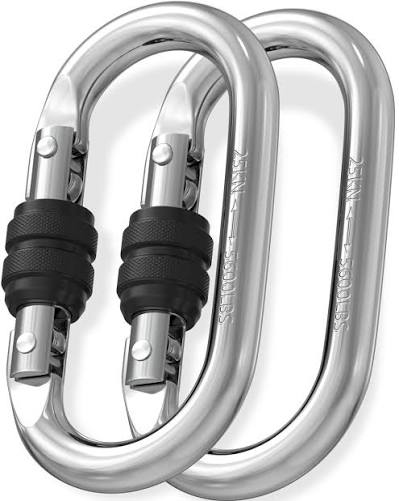
How Does a Carabiner Work? The Physics, Mechanics, and Failure Modes Behind the Clip
A carabiner transfers load along its solid metal spine while a spring-loaded, hinged gate lets you clip things in and out. Loaded correctly along its major axis with the gate closed, a standard climbing carabiner holds 20–25 kN (roughly 4,500–5,600 lbs). That number drops by more than half the moment the gate is open or the load goes sideways.
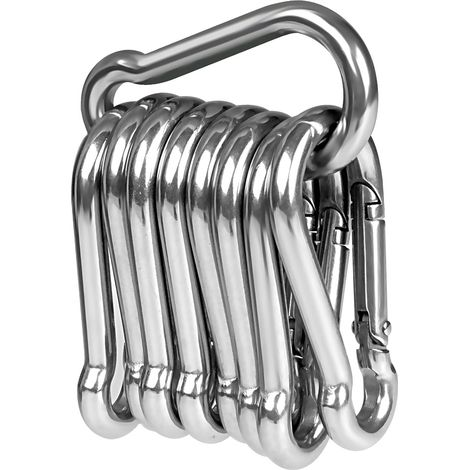
Where to Buy Carabiners: Trusted Retailers by Use Case (Climbing, Utility, Bulk)
For climbing and life-safety, buy only from certified specialty retailers (REI, Backcountry, Petzl.com) that display CE EN 12275 or UIAA 121 ratings on the product page itself. For keychain and utility use, general retailers like Amazon and Walmart are fine. Never buy load-bearing carabiners from third-party marketplace listings. Source bulk industrial hardware direct from suppliers like Grainger.
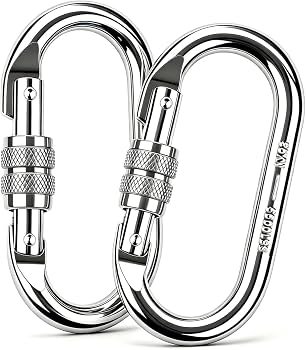
How to Fix a Carabiner: Field Repairs, Cleaning, and When to Retire It Instead
Most carabiner problems (sticky gates, dirt, mild corrosion) are fixable with warm water, a soft brush, and silicone lube. Anything past that, a bent gate, a deformed spine, sharp burrs, a rope groove pushing 1mm, or a hard fall onto rock, and the carabiner is done. You retire it. You don’t file it, weld it, or swap parts on it. That’s the entire framework.
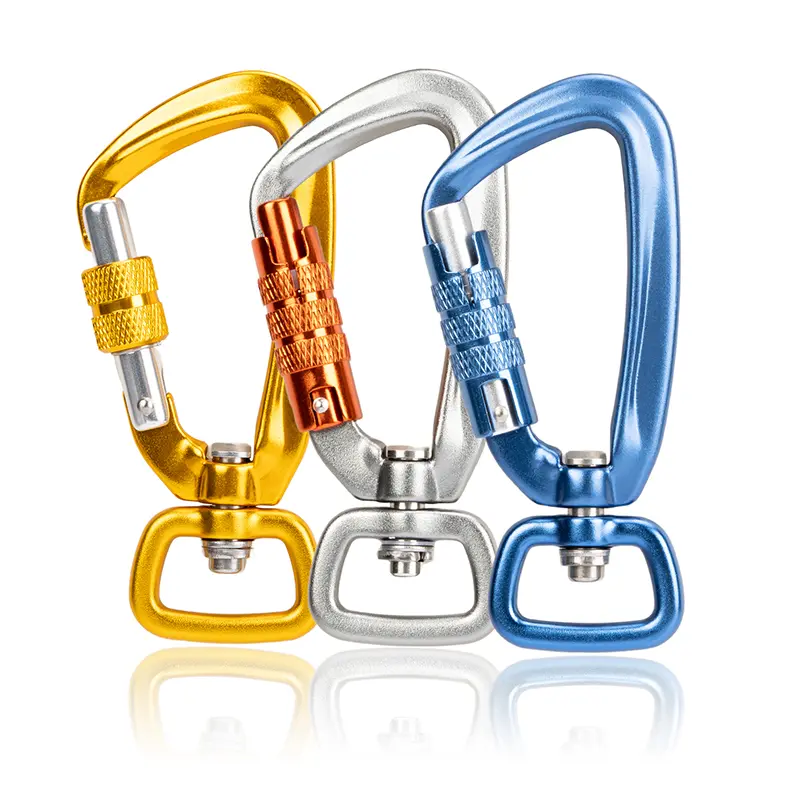
How to Read a Climbing Carabiner: Every Marking Decoded
A carabiner’s markings tell you three things: how strong it is (in kN), how it’s certified (CE and UIAA), and when it was made. The three kN numbers on the spine show strength along the major axis, minor axis, and with the gate open, in that order. Learn to read those and most of the guesswork on a used rack disappears.