How to Choose a Carabiner Manufacturer?
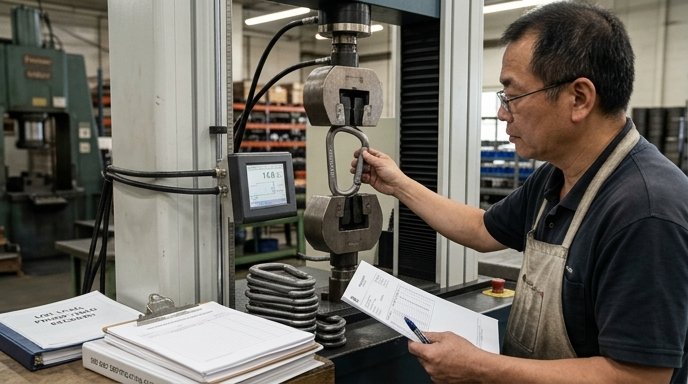
TL;DR: Choosing a carabiner manufacturer comes down to three things: certification scope (UIAA/EN/ANSI vs. novelty-only), forging capability (hot-forged for load-bearing, stamped for keychains), and factory legitimacy (real production vs. trading intermediary). Verify with lot-level proof-load records, not generic certificates. First, Classify Your Carabiner — Not All Suppliers Can Legally Make Yours Before you contact anyone, classify your product’s end use. The legal and manufacturing requirements for a keychain accessory share almost zero overlap with life-safety hardware, and treating them as a spectrum is how importers end up on recall lists. If your carabiner is intended for climbing, it falls under EN 12275 in Europe, which requires a minimum major axis strength of 20 kN for basic (Type B) connectors. Industrial fall-arrest applications require EN 362 in the EU and ANSI Z359.12 in the United States. The ANSI standard is particularly strict, mandating a 3,600 lb (16 kN) gate strength to prevent rollout during a fall. Under EU PPE Regulation 2016/425, any carabiner designed to protect against falls from height is Category III PPE — life-saving equipment. Selling an uncertified “climbing-style” carabiner for load-bearing use violates this regulation and exposes the importer to legal penalties and mandatory recalls. If your product
7075 vs 6061 Aluminum in Carabiners
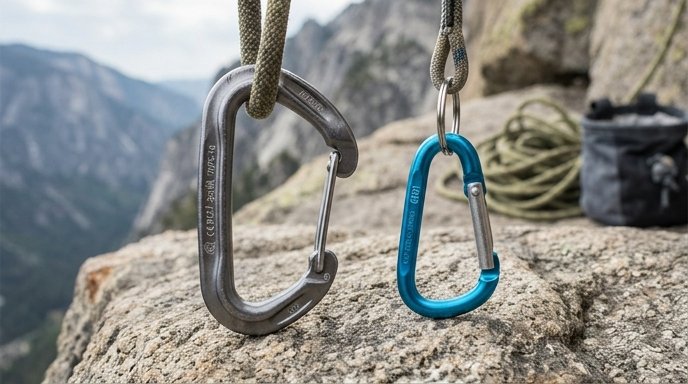
TL;DR: 7075 aluminum is roughly 80% stronger than 6061, which is why almost every certified climbing carabiner uses 7075 and almost every utility or keychain carabiner uses 6061. 7075-T6 runs 572 MPa UTS versus 310 MPa for 6061-T6. The catch: 6061 resists stress corrosion cracking better, and it’s a fraction of the cost. The Short Answer: Which Alloy, Which Carabiner Manufacturers split aluminum alloys along a pretty hard line. Life-safety gear needs the best possible strength-to-weight. Accessory hardware needs to be cheap and to not rust in your junk drawer. Those two priorities don’t overlap much. Petzl, Black Diamond, and DMM all forge their load-bearing climbing carabiners from 7075. The high zinc content is what lets these companies build a biner that weighs under 30 grams and still holds 20 kN (roughly 4,500 lbs). Brands making accessory clips (Nite Ize is the obvious example) use 6061 or 6063 instead. Cheaper to extrude, cheaper to machine, holds up fine to weather. It’ll also fold under your body weight if you clip into the wrong one, which is a problem we’ll get to. Use Case Recommended Alloy Why Rock Climbing / Alpinism 7075-T6 Max strength-to-weight; meets UIAA 20 kN. Arborist / Rescue
Military-Grade Carabiners: Specs Explained
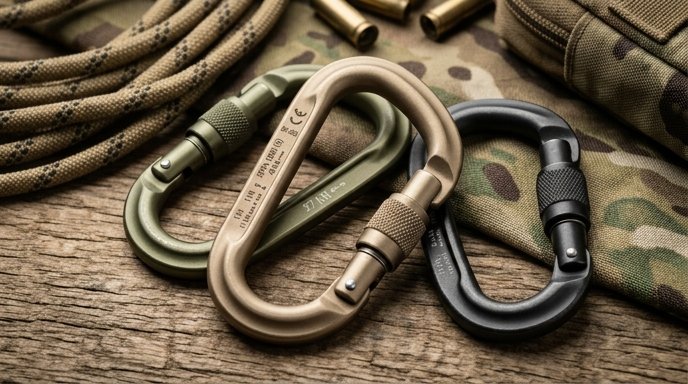
TL;DR: A “military-grade” carabiner is a locking connector that meets load-bearing standards used by armed forces, typically NFPA 1983 (now NFPA 2500) or EN 362, with a minimum major-axis strength of 27–40 kN. Most issued hardware is hot-forged 7075-T6 aluminum or alloy steel with an auto-locking gate. There is no single unified MIL-SPEC document for carabiners. The military buys certified commercial-off-the-shelf gear and assigns it an NSN. The “Military-Grade” Label — What It Actually Guarantees (and Doesn’t) “Military-grade,” on a carabiner, is marketing. Search the DLA ASSIST database and you will not find an active, unified MIL-STD or MIL-PRF that dictates dimensions, materials, and load ratings for a universal military carabiner. What actually happens: the DoD procures Commercial Off-The-Shelf life-safety equipment. When a carabiner gets a National Stock Number, the procurement contract typically requires it to meet civilian life-safety standards — NFPA, CE EN 362, or ANSI Z359.12. The only strictly military regulation that touches these connectors is the Berry Amendment (10 U.S.C. § 2533a), which pushes preference toward domestically sourced and smelted specialty metals. So when a manufacturer calls a carabiner “military-grade,” what they usually mean (if they mean anything) is that the hardware mimics the specs of COTS
Military-Grade Carabiners: Specs Explained
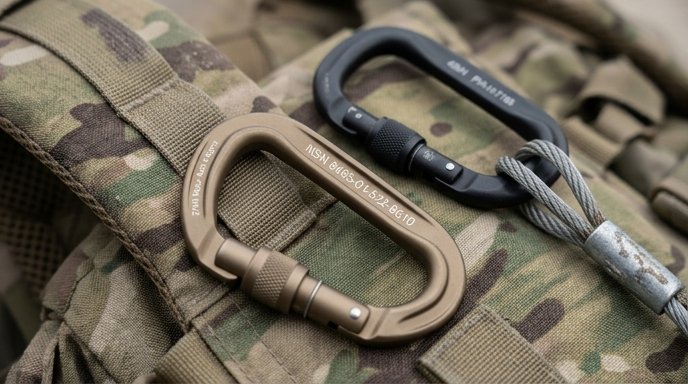
TL;DR: “Military-grade” isn’t a certification. It usually means a carabiner that’s been assigned a National Stock Number or meets a civilian life-safety standard the DoD happens to buy against. The honest shorthand: 25+ kN major axis, auto-locking gate, forged body, MIL-A-8625 Type III anodizing. Without an accompanying NFPA or UIAA rating, the label is marketing. What “Military-Grade” Actually Means on a Carabiner Label There is no single MIL-SPEC standard for carabiners. When a manufacturer stamps “military-grade” on the spine, that’s a marketing choice, not a regulatory one. The DoD rarely drafts ground-up specs for climbing hardware anymore. They buy Commercial Off-The-Shelf gear that already meets civilian life-safety standards, assign it an NSN, and move on. The closest thing to a dedicated military standard is the Parachute Industry Association’s hardware specs, like PIA-H-7195 for parachute links. For ground troops, SAR, and SOF, the military assigns a National Stock Number to existing civilian carabiners that pass their procurement filters. No NSN, no recognized civilian life-safety rating? Then “military-grade” means nothing on that label. Marketing Claim What to Look For Red Flag “Military-Grade Strength” UIAA 121, EN 362, or NFPA 2500 certification No kN rating stamped on the spine “Tactical Coating” MIL-A-8625 Type
What Makes a Carabiner ‘Tactical’?
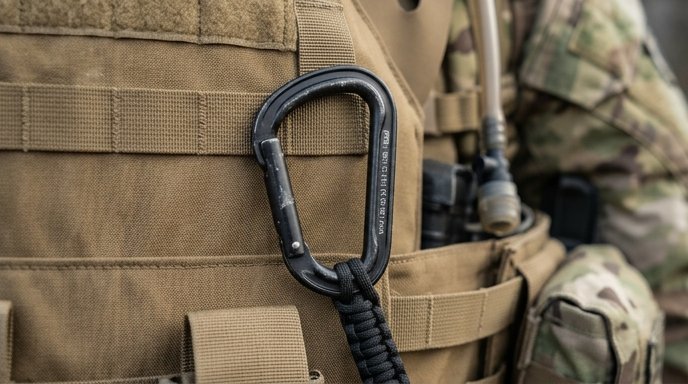
TL;DR: A tactical carabiner is a utility clip built for military, LEO, or duty-rig use. The telltales are a non-reflective finish, decent gate strength under multi-axis load, corrosion-resistant material, and a snag-free profile that plays nice with MOLLE. Most are not life-safety rated. If you actually need to hang off one, look for NFPA 1983 or EN 362. Marketing copy doesn’t count. The “Tactical” Label — Spec Category or Marketing Spray-Paint? There is no official standard that defines a “tactical” carabiner. The word is a description, not a specification: a utility carabiner intended for military, LEO or duty use, usually identified by a non-reflective coating, snag-resistant geometry and a kN rating stamped somewhere on the spine. Climbing hardware answers to the UIAA. Tactical gear answers to nobody in particular. The DoD does not maintain a specific MIL-STD for carabiners as a category. Procurement is COTS — commercial off-the-shelf hardware that already meets civilian rescue standards, assigned an NSN for inventory purposes. NSN 8465-01-560-1317, for example, is a standard non-locking utility carabiner used for general attachment. Because the word is unregulated, the market is drowning in cast-zinc clips painted black and shelved next to actual duty kit. A carabiner only earns
Steel vs Aluminum Rescue Carabiners
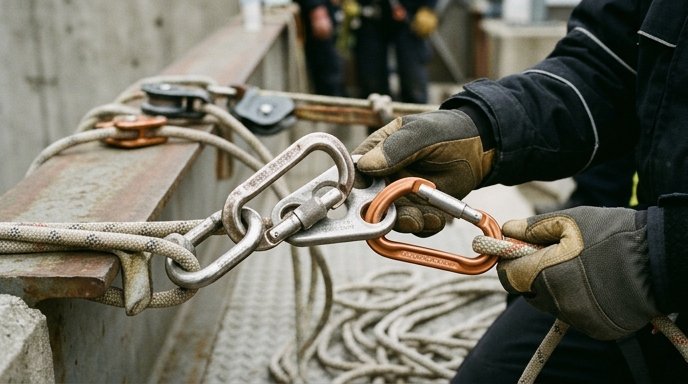
Steel rescue carabiners give you 40+ kN typical strength and roughly 3-5x the service life in high-cycle use. Aluminum weighs 60-70% less and makes sense when mobility matters more than longevity. Pick by application, not by shop default. Mixed-material systems are fine, provided somebody is actually inspecting them for uneven wear instead of just signing the logbook. The Decision Framework in 30 Seconds Steel for fixed industrial anchors, heavy haul systems, and structural fire overhaul. Aluminum for wilderness SAR, swiftwater, and personal harness attachments. Both when you’re building mixed systems and can isolate steel to the high-friction points. No rescue team can standardize on one material without giving up either mobility or durability, and anyone selling you otherwise is selling you something. The matrix below maps rescue domains to primary material requirements, drawn from standard operating procedures used by municipal fire departments and rope access organizations. Application Primary Recommendation Why Exception Case Wilderness SAR Aluminum Weight savings (carrying 30+ carabiners for miles). Helicopter hoist hooks (steel required). Structural Fire / Overhaul Steel Heat resistance; 7075-T6 aluminum weakens above 150°C. Personal bailout kits (aluminum). Swiftwater Rescue Aluminum Corrosion resistance; lighter weight in water. Fixed shore-based highline anchors. Confined Space / Industrial